



THE HEALING WATER

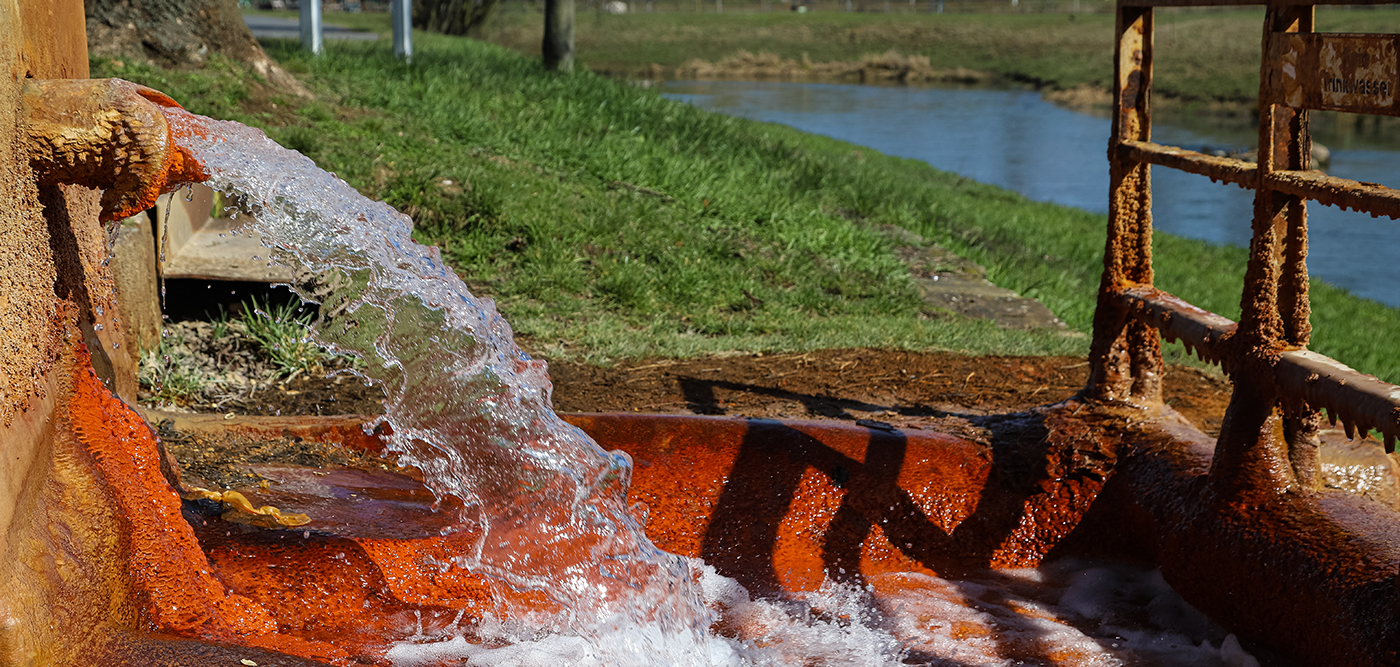
The high-quality water shoots up from the depths
A bridge over the Nidda that leads to nowhere? Not quite; it leads to the Roman Spring and no further. Here, the sparkling water shoots up from a depth of 287 m. The spectacle can be observed from the platform.
The well was drilled between 1929 and 1930 on the left bank of the Nidda because the Hessian Spring Protection Act at the time only allowed drilling to a depth of 15 m. Across the river was Prussian territory, which had no such restrictions.
It is a truly extraordinary mineral water that bubbles up to the surface under its own power due to its high carbon dioxide content. With a total mineralization of nearly 5,000 mg, the Bad Vilbel Roman Spring is one of the most mineral-rich springs in Germany.
In 1955, the source was officially recognized as a medicinal spring and was subsequently used for spa treatments at the Bad Vilbel Kurhaus. Today, the spring is known as the Bad Vilbel Roman Spring and is available bottled as medicinal water.
The footbridge was built in 1933 as a connection between the spring and the building opposite, which housed the associated carbon dioxide separation plant. In 2007, the Hassia company renovated the bridge and, with the support of the city, transformed the area around the well into a pleasant rest area.


