
5 HISTORIC PLACES

HIGHLIGHTS OF HISTORY
Bad Vilbel – that’s the name we know the town by today. It wasn’t always so: the first known name from 774 was “Felwila” – and the Romans were here much earlier. Later it became “Fülfel”, then “Filbel”, and from the early modern period onwards “Vilbel”.
However, many more centuries passed before Vilbel was granted the title “Bad” in 1948.
The settlement emerged at a shallow point in the Nidda – a so-called ford – where traders could cross the river on foot or by horse-drawn cart. As there were not many river crossings, this became a crossroads of trade routes from Büdingen and from Friedberg to Frankfurt. Ideal conditions for founding a settlement.
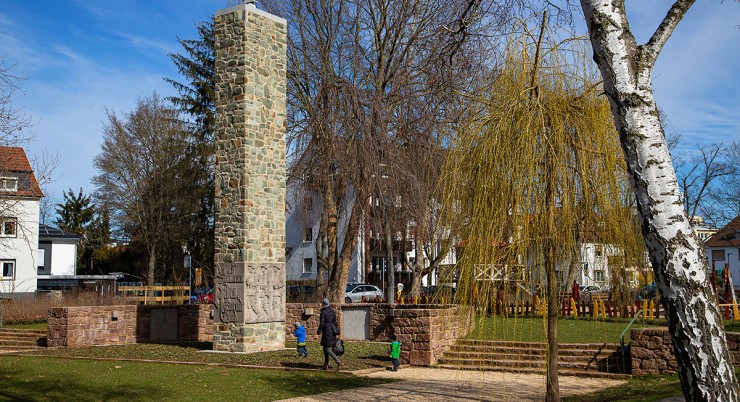
> Take a look here: Roman mosaic, market square and the Rathaus Bridge with information boards
As early as the early Middle Ages, a Wildhube was established near the ford, where the castle stands today.
> Take a look here: The Castle
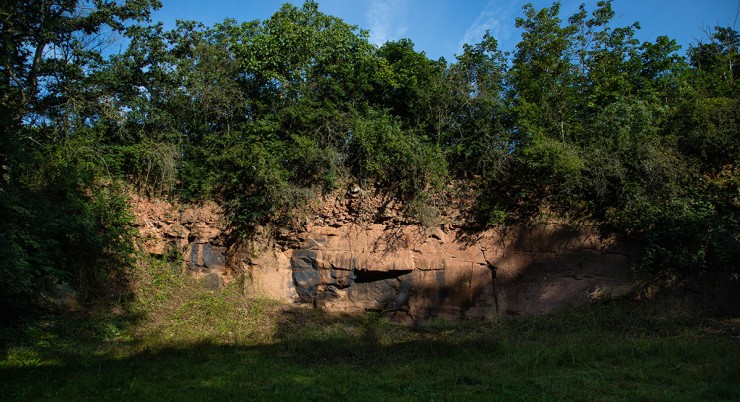
Special geological conditions drove further development: sandstone began to be quarried as a building material as early as Roman times; some quarries still bear witness to this today and form valuable biotopes.
> Take a look here: Geology themed trail “Auf dem Rothen Horst”
In the mid-19th century, the development of a mineral spring laid the foundation for Vilbel’s spring-water industry. At times, around thirty companies contributed significantly to the economic upswing. In 1948, Vilbel was granted the title “Bad”.
> Take a look here: Spring and Spa Museum, Water Experience Trail, former spring-water businesses, drinking fountains, Brod’s Bathhouse
The Nidda served as a transport route and formed the basis for many other professions, such as fishermen and tanners.
> Take a look here: Water Experience Trail, Gerberpark
Over time, this has developed into a charming, modern town where people love to spend time.
> Take a look here: Niddaplatz, Frankfurter Straße, market square, parks, outdoor activities

A glass pavilion near the spa park houses the reconstruction of a Roman mosaic that was once part of a bathhouse. This masterpiece of ancient mosaic art is considered the most beautiful in all of Germany. It depicts mystical sea creatures, grotesque hybrid beings, and real animals gathered around the sea god Oceanus.
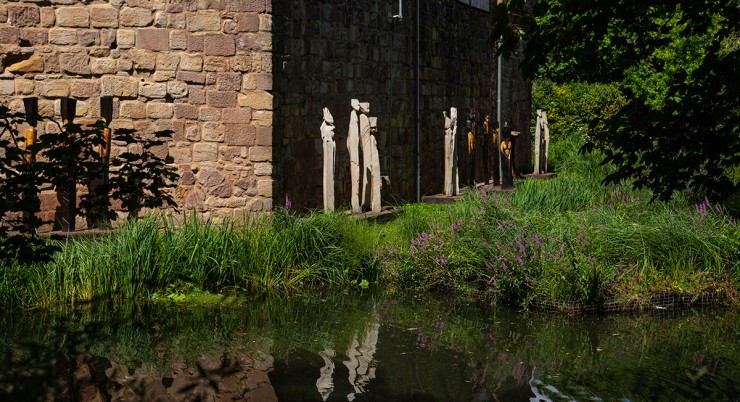
In the heart of the city, surrounded by parklands, the ruins of a moated castle stand in an idyllic location on the banks of the Nidda. It originated from a royal forest estate known as a “Wildhube.” This once vast royal forest required the management of game and woodland for the royal hunt by the forest warden.
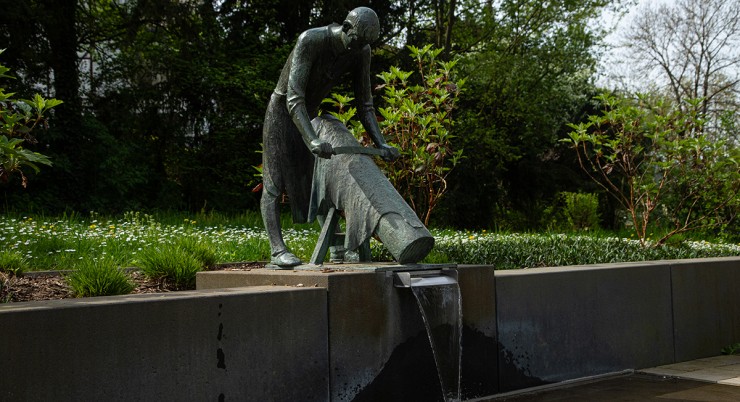
It is the city’s birthplace and lifeline. Where Bad Vilbel once emerged, the Nidda had a natural ford, making it possible to cross the river there.
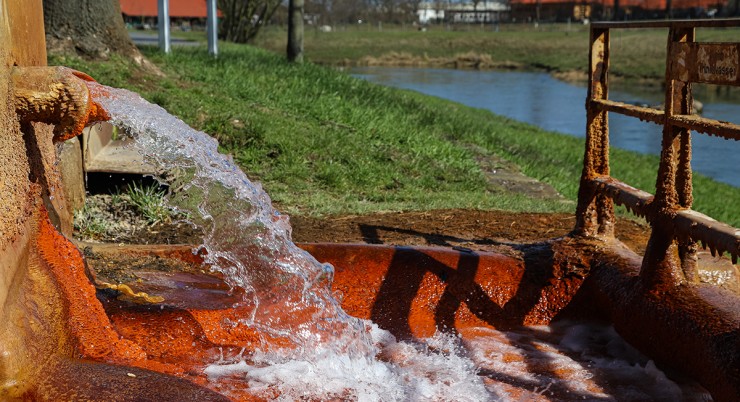
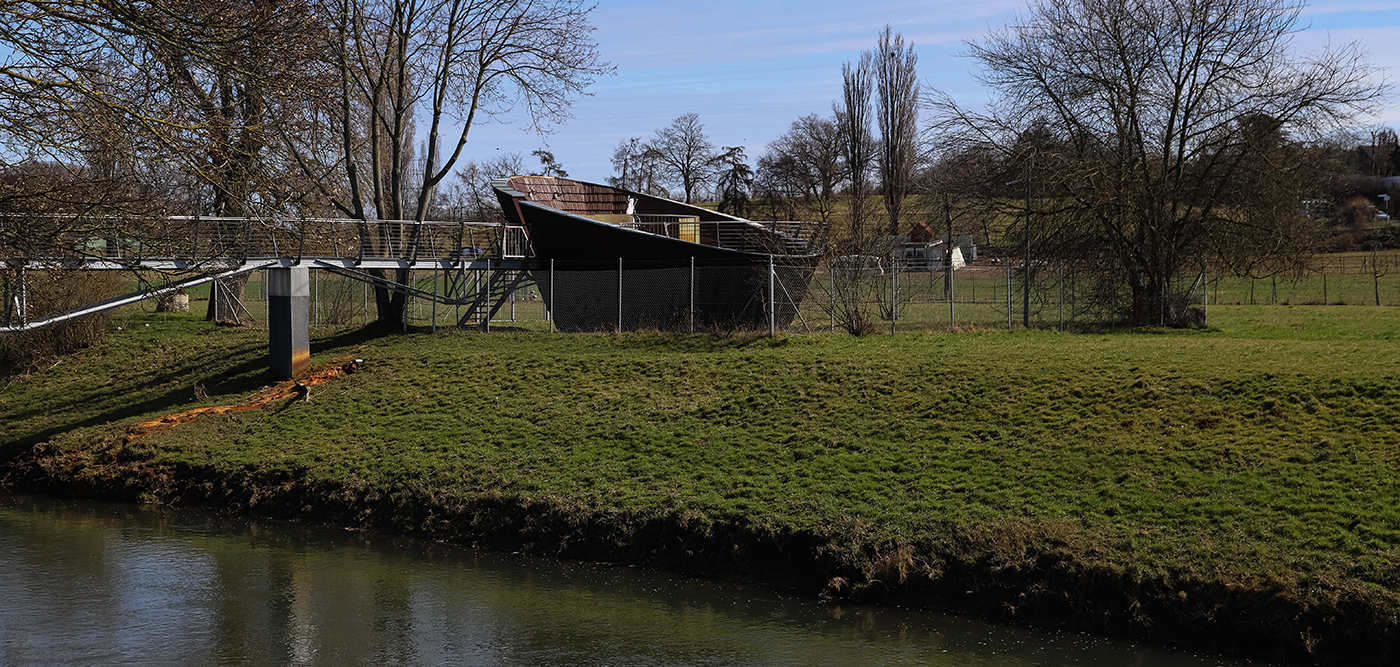
A bridge over the Nidda that leads to nowhere? Not quite; it leads to the Roman Spring and no further. Here, the sparkling water shoots up from a depth of 287 m. The spectacle can be observed from the platform.
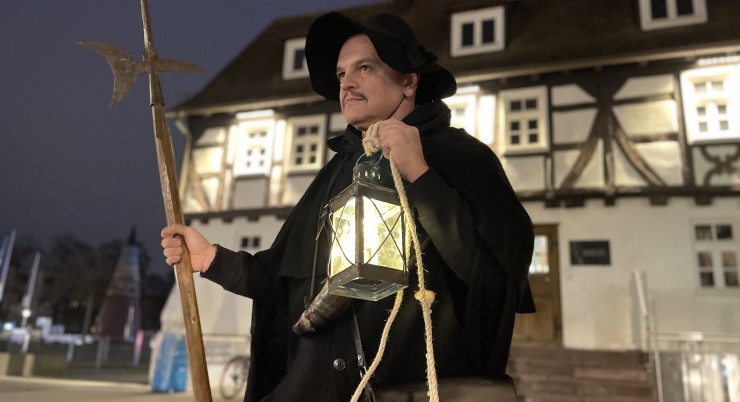
Guided city tours are offered on a wide range of topics. The varied programme includes history and current affairs, exciting and entertaining stories. From geology and city walks to tours for children. Or be surprised by tours with titles such as “Bloody Good Friday” or “Gold Rush: The Water Trade”.